From the private terminal to arrival
Your first private jet flight: what to expect
The step-by-step sequence of a first private flight and the tips to enjoy it with complete peace of mind.
Flying on a private jet for the first time often raises the same questions: where to check in, at what time, how does boarding work, what do you need to bring. The good news: the experience is simpler and faster than a commercial flight, and no special preparation is required. Here is the complete sequence of a first flight, step by step, so you can enjoy the journey with complete peace of mind.
Before departure: what changes straight away
The biggest difference starts at the booking stage. In private aviation, you don’t go through a counter or an impersonal platform: a single point of contact organizes the flight around your needs, from aircraft selection to onboard catering. If you’re new to the subject, our guide how to book a private jet walks through every step.
A few days before the flight, you receive the essential information: the departure terminal, the check-in time, the aircraft registration and the crew’s contact details. You provide the passengers’ ID documents and any preferences (meals, drinks, reading matter, special requirements). Everything is settled in advance, which explains the seamless experience on the day.
Arriving at the private terminal (FBO)
First thing to remember: you do not go to the main terminal. Private flights depart from a private terminal, operated by an FBO (Fixed Base Operator), often set apart from commercial traffic. It is a dedicated, calm and comfortable building where you are welcomed by name.
No queues, no crowds. A private lounge awaits, with drinks and a work area, while final fueling and checks are completed. Your vehicle can often drop you right next to the aircraft. To understand everything about this ground-side world, see our dedicated guide to FBOs and private terminals.
This is also why the time saving is so significant: you generally only need to arrive 15 to 30 minutes before takeoff, whereas a commercial flight requires several hours of anticipation.
Formalities: streamlined, but real
Traveling privately does not exempt you from checks, but they are noticeably faster and more discreet. For a domestic flight, formalities are often minimal. For an international flight, passport control and customs still exist, simply in a private setting and without any interminable wait.
Remember to travel with a valid identity document (national ID card or passport depending on the destination) and, where required, the necessary visas. Our article on identity checks and customs for private jets explains exactly what to expect depending on the type of trip.
Boarding: direct and stress-free
This is one of the great pleasures of a first private flight: boarding goes directly to the aircraft, with no long jetway or gate number to track. The crew welcomes you at the foot of the stairs, settles you in and walks you through the cabin.
No upgrade to negotiate and no randomly assigned seat: the aircraft is privatized for you and your guests. You board when everything is ready, and takeoff follows shortly after. This absence of waiting between arriving at the terminal and takeoff is often what surprises first-time flyers most.
The onboard experience
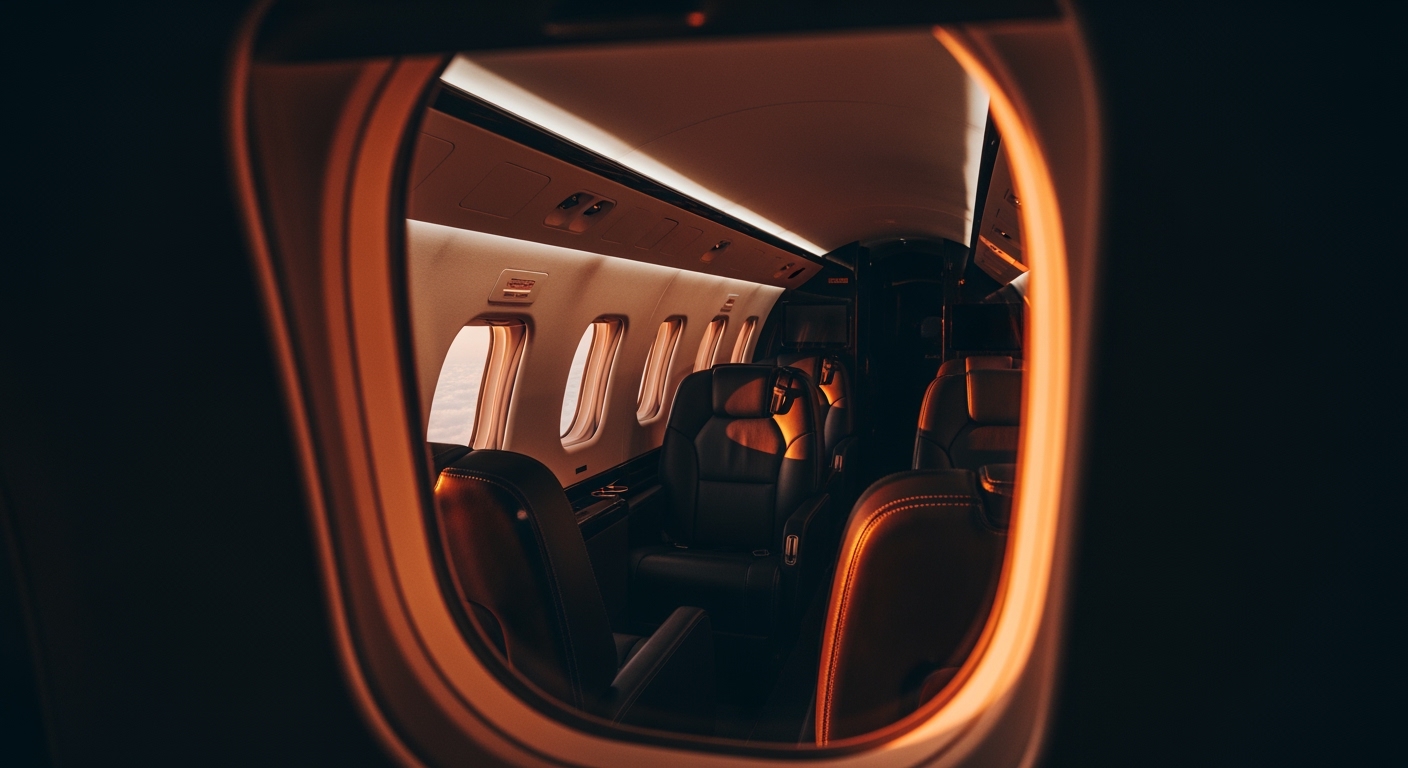
Onboard, space and calm prevail. Depending on the size of the aircraft, you have wide seats, a privatized cabin and, on larger models, separate areas to work, dine or rest. The service is personalized: food chosen in advance, drinks to your taste, in-flight connectivity on many aircraft.
You manage your time freely. No mandatory announcement, no unknown neighbor, no standardized meal tray. The crew adapts the pace of service to your wishes, whether you want to run a meeting, dine at leisure or sleep. It is this freedom, as much as the comfort, that defines the experience.
Dress code and comfort
No dress code applies. Opt for a comfortable and well-groomed outfit, suited to your destination and the purpose of the trip. The goal is simple: to be at ease throughout the flight.
Luggage
On the luggage side, flexibility is real but hold space depends on the aircraft model. A light business jet does not offer the same volume as a large-cabin private jet. It is therefore useful to flag bulky items in advance (sports equipment, instruments, professional gear) so the operator can select the right aircraft. Full details can be found in our guide on private jet luggage capacity.
Good questions to ask
For a successful first flight, a few questions are worth raising with your contact:
- Which private terminal does the flight depart from, and what time should you arrive?
- Which identity documents are required for this specific destination?
- What is the luggage capacity of the aircraft selected?
- Can catering and onboard preferences be customized?
- Are you traveling with children or a pet? If so, flag it for the right equipment.
A good broker anticipates most of these points, but confirming them in advance ensures a trip free of surprises.
Why an independent broker makes a first flight easier
For a first time, having the right support makes all the difference. An independent broker like Private Jets Connect owns no aircraft: it puts operators in competition to offer you the best aircraft for your route, at the right price, and remains your single point of contact from quote to arrival. No jargon to master, no complex process to navigate: everything is handled for you.
Conclusion
A first private jet flight comes down to three words: simplicity, speed, comfort. You arrive at the private terminal a few minutes early, board directly, enjoy a privatized cabin and streamlined formalities—all accompanied by an attentive crew and broker. No prior experience is required: you simply let yourself be guided.
Popular private jet destinations

Why choose Private Jets Connect
Guaranteed security and confidentiality
Maximum protection of your data and travel in complete discretion
Access to over 5,000 available jets
The world's largest fleet at your disposal
24/7 Service with a dedicated advisor
Personalised assistance at any time, anywhere in the world
Negotiated rates, no hidden fees
Total transparency and best prices guaranteed
Frequently Asked Questions
Everything you need to know about our services
How early do I need to arrive for a first private jet flight?
Allow just 15 to 30 minutes before departure, compared with several hours for a commercial flight. You check in at the private terminal (FBO), not the main terminal. On some domestic flights, boarding can take just a few minutes.
What should I wear on board a private jet?
There is no imposed dress code. Opt for a comfortable, smart outfit suited to your destination and the purpose of the trip. No need for a suit or evening wear: the goal is simply to travel at ease.
Can I bring children or a pet on a private jet?
Yes. Private jets are in fact particularly well-suited to families and pets, who travel in the cabin with you. Mention this when booking so the crew can prepare appropriate seating, catering and equipment.
What happens on board during the flight?
You enjoy a privatized cabin, personalized catering and space to work or rest. You manage your time freely: no general announcements, no unknown neighbors, and the crew adapts the service to your preferences.