Dogs, cats: in the cabin and in complete comfort
Travelling by private jet with your pet
What is possible on board and the veterinary documents required to travel with your pet by private jet.
Travelling with your dog or cat should never be a source of stress — for you or for them. Yet that is often the case in commercial aviation, where animals frequently end up in the hold, separated from their family. A private jet changes the picture entirely: your companion travels in the cabin, with you, in great comfort. The only thing left to plan is the veterinary formalities, which remain mandatory. This guide covers both aspects: what is possible on board and the documents you will need.
The pet in the cabin: the great advantage of a private jet
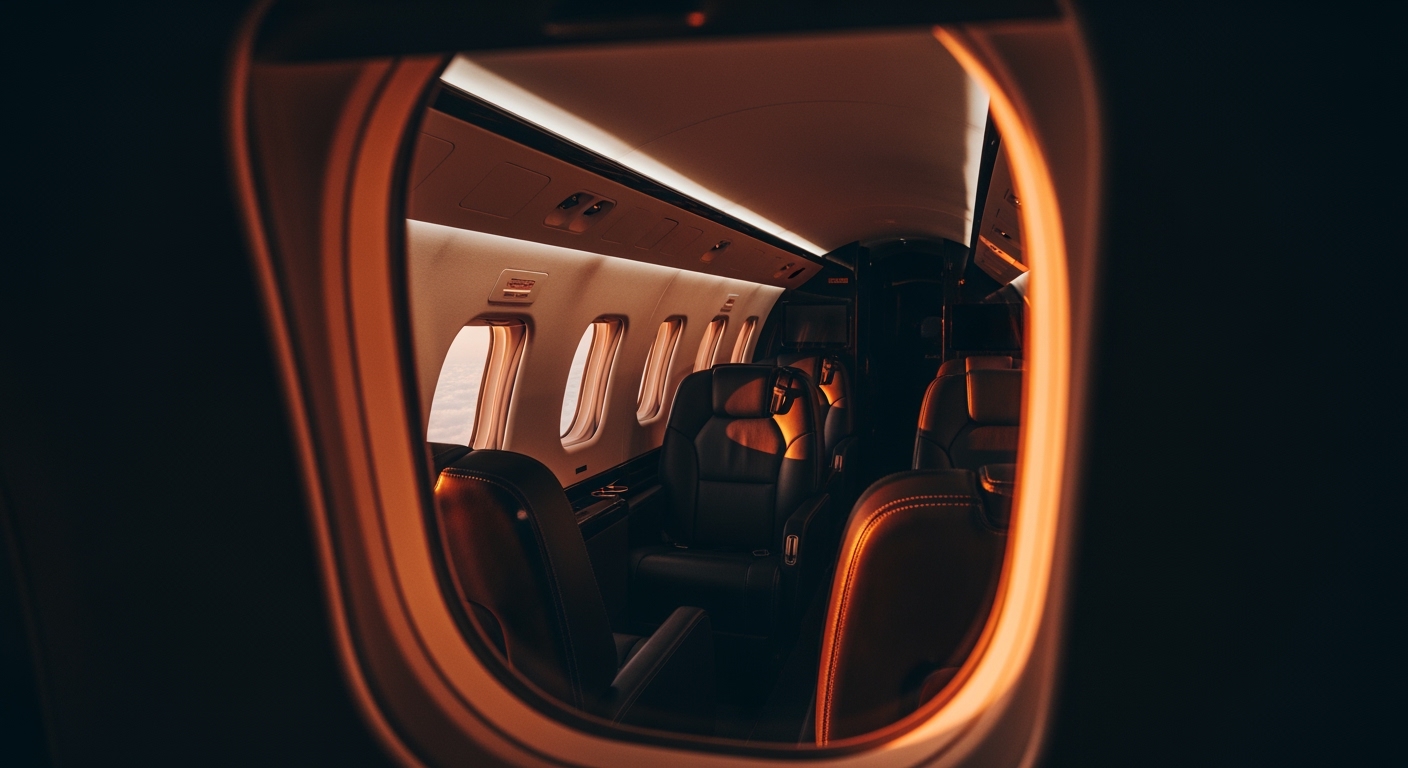
On a private jet, there is no animal hold and no isolated crate. Your dog or cat travels in the cabin, by your side, from takeoff to landing. This is arguably the most striking difference from a scheduled flight, where animals above a certain size are relegated to the hold — a noisy, dark and anxiety-inducing environment.
This proximity brings concrete advantages. You can reassure your pet at any moment, monitor its condition, give it water and adapt the journey to its rhythm. The absence of separation stress typically results in a much calmer animal throughout the trip.
A calming environment for the animal
A private jet cabin is private: no crowd, no repeated public announcements, no unknown neighbours. For a sensitive animal, this calm makes all the difference. The crew, informed in advance, adapts the service and looks after your companion’s wellbeing. If you are new to private aviation, our guide on your first private jet flight details every step of the journey, from the private terminal to arrival.
Which animals can travel?
Dogs and cats are by far the most frequent companions on board. Whatever their size — from a small cat to a large dog — they can in principle travel in the cabin, something impossible on most commercial flights.
Other pets are sometimes accepted, such as certain small mammals or birds, depending on the aircraft, the operator and the regulations of the destination. Each case warrants prior confirmation. The best approach is always to declare the exact nature of your animal at the time of booking to confirm feasibility and prepare the flight smoothly.
Number and size of animals
Since the aircraft is entirely private, it is generally possible to bring several animals at the same time, within the bounds of comfort and safety on board. The number and size of your companions influences the aircraft choice: a large dog will require more floor space than a cat in a carrier. By communicating this information in advance, the operator can select the most suitable aircraft.
Carrier bag or free in the cabin?
Is a crate required? The answer will reassure many pet owners: no cargo crate. A soft carrier bag is recommended for sensitive phases (takeoff, turbulence, landing) and for the animal’s comfort, but it can enjoy the cabin during the flight, subject to the crew’s instructions and its behaviour.
In practice, a small cat will often feel more secure in its carrier, while a dog used to travelling may rest at your feet. The key is to bring its familiar items: its blanket, toy, bowl. Also limit its meal before the flight and bring water — exactly as you would for a car journey.
Private jet vs. commercial aviation for pets
The contrast is striking. On a scheduled flight, beyond a weight limit that is often just a few kilograms, the animal travels in the hold — a pressurised but noisy and stressful compartment — after hours of waiting at the airport. Airlines apply strict rules, per-flight quotas and sometimes breed restrictions.
On a private jet, these constraints largely disappear:
- In the cabin without exception, with no weight limit linked to the hold
- No long waits at the terminal thanks to the private FBO
- Flexible schedules, adapted to the animal’s comfort
- Less stress, so a calmer animal on arrival
One thing that does not change, regardless of the mode of transport: the veterinary and customs formalities, which we now detail.
Veterinary documents and formalities
This is the aspect not to overlook. Travelling with an animal — privately or commercially — requires compliance with health regulations. Rules vary by country and change regularly: the information below provides a general baseline, which must be confirmed with your vet and the destination country’s authorities.
The European pet passport
Within the European Union, the pet passport is the reference document for dogs, cats and ferrets. Issued by an authorised vet, it brings together the animal’s identity, owner contact details, microchip number and vaccination history, particularly the rabies vaccine. This document enables travel between EU countries.
The electronic identification microchip
Electronic identification by microchip (transponder) is compulsory for travel. The chip must be readable and compliant with current standards, and its number must match the one recorded in the passport. This is the first thing checked at border controls. An old or non-compliant chip may require a specific reader: check this with your vet before departure.
An up-to-date rabies vaccination
Rabies vaccination is required for almost all international travel. It must be valid and current, administered after microchipping and within the regulatory timeframes (a minimum interval is often imposed between vaccination and travel). Without a valid rabies vaccine, travel is generally not possible.
The health certificate for international travel
For trips outside the European Union, a health certificate drawn up by a vet — sometimes endorsed by official services — is frequently required. Its format and validity period depend on the destination country. Some countries require additional tests, such as a rabies antibody titration (a blood test confirming the vaccine’s efficacy), which must be carried out several weeks or even months before departure.
Specific rules and quarantine
Some countries apply particularly strict rules. The United Kingdom, for example, imposes precise requirements (microchipping, vaccination, sometimes anti-parasitic treatment) and has historically applied quarantine measures to animals that do not meet all the conditions. Other island or remote destinations may require import permits, long lead times or enhanced controls.
The golden rule: plan several weeks in advance and check the official requirements of the destination country. On the topic of arrival and departure controls, our guide on private jet customs and identity checks explains the framework for border formalities in private aviation.
Preparing your pet’s flight well
Beyond the paperwork, a few simple habits make the journey more comfortable:
- Declare the animal at booking, including species, size and number
- Prepare documents well in advance, especially for international travel
- Bring familiar items: carrier, blanket, toy, water bowl
- Adjust the meal before departure to minimise discomfort
- Plan for comfort on board in coordination with the crew
An independent broker like Private Jets Connect coordinates everything: selecting the right aircraft, confirming with the operator and providing support through to departure. To understand the full process, see our guide on how to book a private jet.
Conclusion
Travelling by private jet with your pet means giving them a journey in the cabin, by your side, away from the stress of the hold and airport queues. Dogs, cats and sometimes other species are all welcome — no isolated crate, and bespoke comfort. The only real thing to plan ahead is the veterinary formalities: passport, microchip, rabies vaccination and, depending on the destination, a health certificate or specific rules. By preparing these in advance and working with an independent broker, you turn a trip that is often dreaded into a serene experience, for you and your companion alike.
Popular private jet destinations

Why choose Private Jets Connect
Guaranteed security and confidentiality
Maximum protection of your data and travel in complete discretion
Access to over 5,000 available jets
The world's largest fleet at your disposal
24/7 Service with a dedicated advisor
Personalised assistance at any time, anywhere in the world
Negotiated rates, no hidden fees
Total transparency and best prices guaranteed
Frequently Asked Questions
Everything you need to know about our services
Does my pet travel in the cabin with me on a private jet?
Yes. This is one of the great advantages of private aviation: your pet travels in the cabin, by your side, and never in the hold. No cargo crate, no stressful separation. Depending on its size and temperament, it can stay in a carrier bag or simply rest at your feet, in the calm of a private cabin.
What veterinary documents are needed for an international flight with a pet?
For international travel, you will generally need a pet passport, an electronic identification microchip and an up-to-date rabies vaccination. Some countries also require a health certificate, a rabies antibody titration or specific rules. Requirements vary by destination: always check with the relevant country’s authorities and your vet.
Can you travel with several pets on board?
Yes, this is entirely possible. Since the aircraft is private, you can generally bring several animals, within the limits of comfort and safety on board. Declare the number and size of your companions at the time of booking so that the operator can confirm the aircraft and prepare suitable equipment.
Is a crate mandatory for transporting a pet?
No, a cargo hold crate does not exist in private aviation. A soft carrier bag is still recommended for takeoff, landing and your pet’s comfort, but it can enjoy the cabin freely during the flight according to the crew’s instructions. It all depends on its size and behaviour.