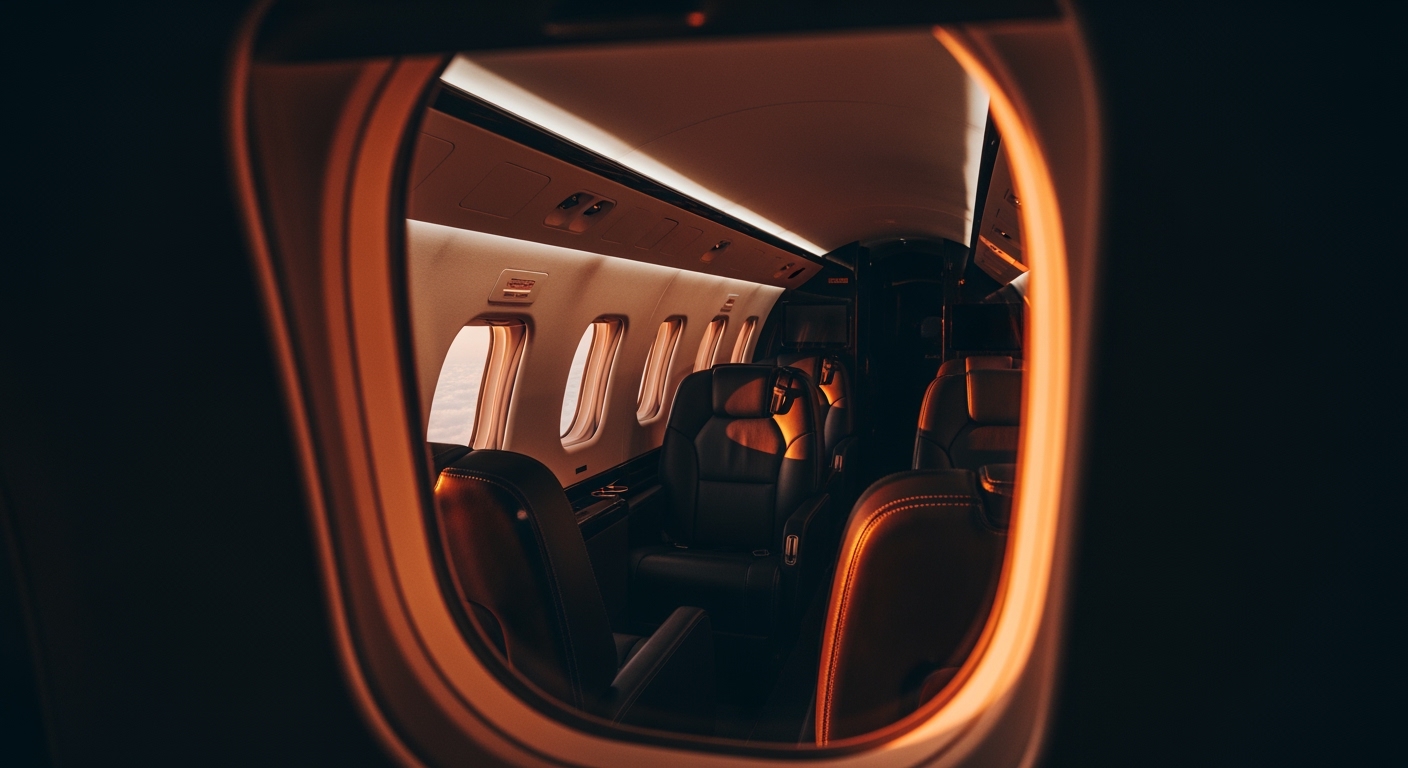
Costs, flying-hour thresholds and flexibility
Renting vs buying a private jet: which is right for you?
The real calculation between renting and buying a private jet, beyond the purchase price alone.
Should you rent or buy a private jet? The question seems simple, but it is rarely resolved by looking at the purchase price alone. Owning an aircraft also means taking on a set of fixed costs that run all year, regardless of the number of hours flown. Conversely, renting means paying only for flights actually taken, with no capital tied up. This guide compares the two approaches on what truly matters: the total cost, the flying-hour threshold above which purchasing can be discussed, and flexibility.
The focus here is precise: buying versus renting. If you are instead weighing the different rental formats (jet card, subscription, on-demand charter), our guide on jet cards, subscriptions and charter is the one that answers that question.
Two opposing logics: owning versus using
Buying a private jet means acquiring an asset, with everything that entails: capital committed, management responsibilities, depreciation and an eventual resale to plan for. Renting means buying a one-off service, with none of those commitments. Between the two extremes sits fractional ownership, which blends a share of ownership with a service-based logic.
The right trade-off depends not on prestige or desire, but on your annual flying volume and your tolerance for tied-up capital. This is precisely the reasoning to apply when evaluating a potential return on investment of a private jet.
The acquisition cost: outright and fractional ownership
Outright ownership
Buying a jet outright means becoming its sole owner. The entry ticket varies enormously by category. As a rough, non-binding guide, a second-hand light jet can be negotiated around a few million euros, a higher-category aircraft between ten and thirty million, and a brand-new long-ranger well beyond that. This figure is only the starting point: you then have to operate, maintain and manage the aircraft.
Fractional ownership
Fractional ownership involves buying a share of an aircraft (one-sixteenth, one-eighth, one-quarter), corresponding to an annual hour quota. You become a co-owner and delegate management to the operator. The model combines three costs: the purchase of the share, fixed monthly management fees (crew, maintenance, insurance) and an hourly rate for each flight. It is a compromise that reduces the capital committed compared to full ownership, but retains a multi-year commitment and tied-up capital.
The hidden costs of ownership
This is where the substance of the calculation lies. The purchase price represents only a portion of the true cost of outright aircraft ownership. Added to it are annual fixed costs that fall due whether the aircraft flies or not.
- Crew: a jet requires qualified pilots — often two crews to ensure genuine availability — with salaries, recurrent training and ratings to maintain.
- Maintenance: scheduled visits, regulatory checks, parts and unexpected repairs. This is one of the heaviest and most variable line items.
- Hangar and parking: sheltering and parking the aircraft at its home base, plus parking fees when away.
- Insurance: hull and liability cover, indexed to the jet’s value.
- Management: administration, scheduling, airworthiness and operational coordination, often delegated to a management company for a fee.
- Depreciation: an aircraft loses value with time and hours. This is a very real cost, even if it only materialises at the time of resale.
Taken together, these items represent each year a significant fraction of the aircraft’s value, before even paying for fuel. For a broader picture of costs that inflate a bill, see also our guide on hidden costs of private jet travel. To this is added the tax dimension, specific to each ownership structure, detailed in our article on private jet taxation for businesses.
Renting: pay per flight, no capital tied up
Renting a private jet, in its most flexible form, is on-demand charter: you pay for each flight when you need it, with no deposit, no subscription and no imposed volume. The rate is expressed as an hourly price by aircraft category. As a rough, non-binding guide, a light jet commonly runs between €2,000 and €4,000 per hour, a midsize between €3,500 and €5,500, and a long-range transatlantic jet between €7,000 and €12,000.
The decisive advantage is the complete absence of fixed costs: no crew to put on the payroll, no maintenance to provision for, no hangar to pay for, no depreciation to absorb. You also change aircraft with every trip, taking the jet best suited to each mission. Commitment-based formats (jet card, subscription, fractional ownership) represent an intermediate position between renting and owning, compared in detail in our guide on jet cards, subscriptions and charter.
The flying-hour threshold: when buying becomes a conversation
The entire decision comes down to one arithmetic question: at how many hours do the fixed costs of ownership become more favourable than the per-flight price of renting?
As a rough guide, outright purchase only seriously begins to be worth discussing at very intensive usage, often cited around 200 to 400 flying hours per year. Below that, the fixed costs (crew, maintenance, hangar, insurance, management) and depreciation are too heavy relative to the hours actually flown: the full cost per hour then exceeds that of charter. Fractional ownership lowers this threshold because costs are shared, but it remains relevant mainly for frequent travellers — well beyond occasional use.
These figures are orders of magnitude, not rules. The real threshold depends on the type of aircraft, the regularity of the routes, the resale value and the ownership structure chosen. The right method remains to reason on the full cost per hour actually flown, not on the headline purchase price alone.
Flexibility, cash flow and resale
Beyond costs, three criteria tip the balance. Flexibility first: an owner is tied to a single aircraft, whereas renting gives access to the full range, from Very Light Jets to long-rangers, matched to each route. Cash flow next: buying ties up significant capital and locks in fixed charges, while renting preserves financial agility. Resale finally: a jet is an asset to liquidate, whose value depends on market cycles, whereas a renter bears no depreciation risk whatsoever.
For the vast majority of profiles, these three factors all point in the same direction: towards renting.
Conclusion
The choice between renting and buying a private jet is not a question of status, but of calculation. Buying adds to the purchase price a cascade of fixed costs (crew, maintenance, hangar, insurance, management) and inevitable depreciation. It only becomes relevant at very high flying volumes, often cited above 200 to 400 hours per year — and even then, you must accept the tied-up capital and the constraint of an asset to eventually sell.
For the vast majority of travellers — occasional to intensive but variable usage — on-demand charter through an independent broker remains the most flexible option: paid per flight, no capital tied up, no fixed costs, with access to every aircraft type. The essential thing is to honestly quantify your real flying hours before making any decision. To compare your specific case, request your free quote from Private Jets Connect.
Popular private jet destinations
Why choose Private Jets Connect
Guaranteed security and confidentiality
Maximum protection of your data and travel in complete discretion
Access to over 5,000 available jets
The world's largest fleet at your disposal
24/7 Service with a dedicated advisor
Personalised assistance at any time, anywhere in the world
Negotiated rates, no hidden fees
Total transparency and best prices guaranteed
Frequently Asked Questions
Everything you need to know about our services
From how many flying hours per year should you consider buying a private jet?
As a rough, non-binding indicator, outright purchase only begins to make sense at very intensive usage, often cited at around 200 to 400 flying hours per year. This is an order of magnitude, not a rule: everything depends on the type of aircraft, the routes and the supporting organisation. Below that volume, on-demand charter almost always remains more advantageous.
What are the running costs of owning a private jet?
Beyond the purchase price, owning a private jet entails significant annual fixed costs: crew salaries, maintenance and regulatory inspections, hangar or parking, insurance, administrative and operational management — not to mention the depreciation of the aircraft. These costs run whether you fly or not, which weighs heavily at low utilisation.
Is fractional ownership a good compromise?
It is a compromise between outright ownership and rental: you buy a share of an aircraft corresponding to an hour quota, with monthly management fees and an hourly rate. You avoid managing an entire aircraft, but you tie up capital and commit for several years. For variable usage, it remains more constraining than on-demand charter.
Is owning a private jet financially worthwhile?
Rarely, in the strict financial sense. A private jet is a depreciating asset with high fixed costs. Ownership is justified primarily by convenience, availability and very high flying volumes, not by a return-on-investment logic. To assess your case objectively, it is better to reason on the full cost per hour actually flown rather than on the purchase price alone.